If you came looking for hyper3d pricing, this review separates the on-screen credit label from verified charges and follows the tested workflow through to the download gate. It also compares the result with SupaVoxel.
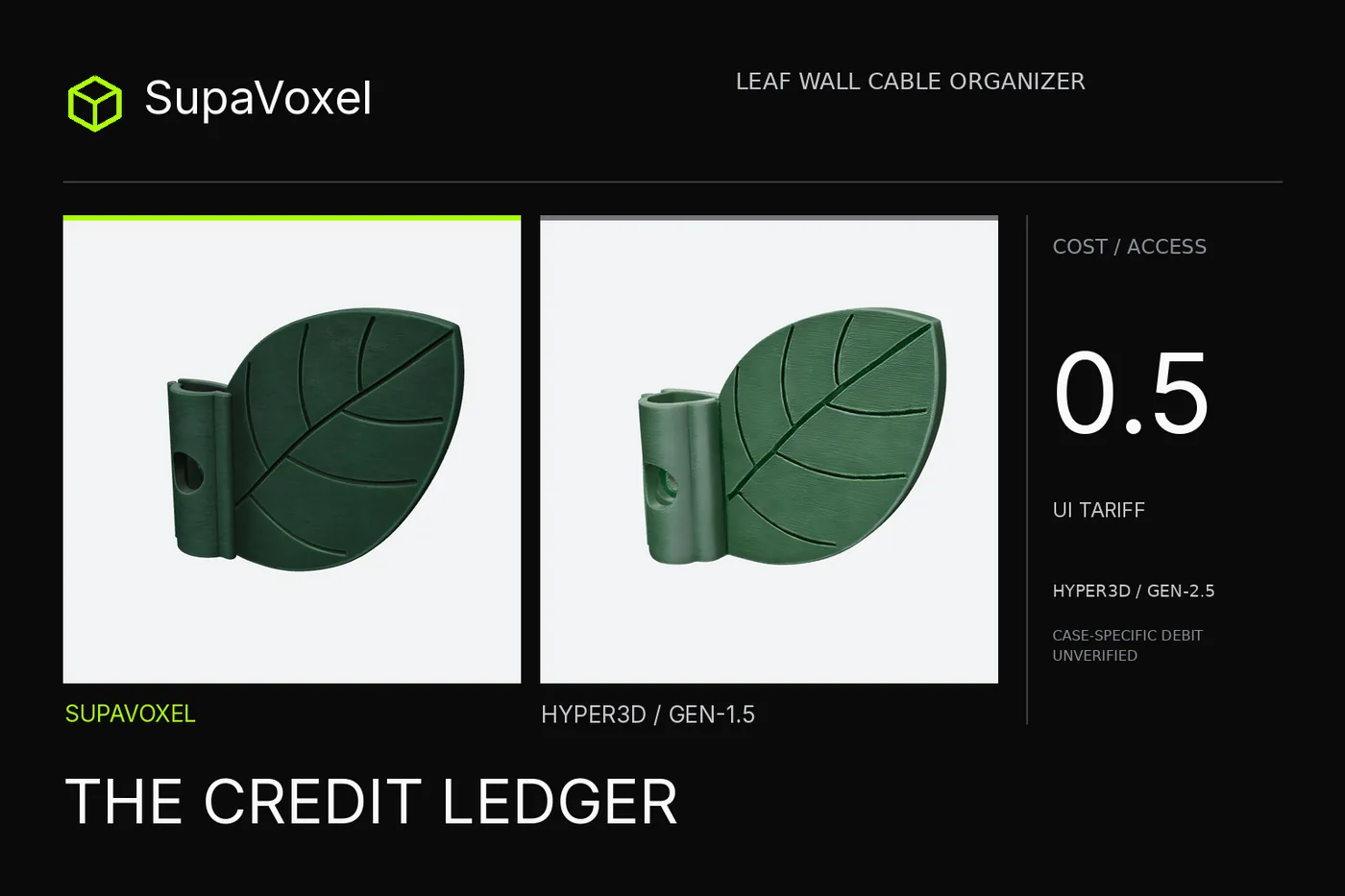
This is an independent test. Nothing here came from vendor access: both tools were used on my own free and paid accounts.
I pressed Generate expecting to leave Hyper3D with a textured leaf-shaped cable clip. The Gen-2.5 result looked convincing on screen and its button said 0.5 Credits. Then I selected GLB, pressed Download and met a subscription gate. The downloadable result required a separate Gen-1.5 run and a separate material pass. This is why I now follow the file and the receipt, not the first number on a button.
My verdict in 60 seconds — SupaVoxel supplied the attributable, textured file; Hyper3D Free's attractive Gen-2.5 preview stopped at Download. The 0.5 Hyper3D credit advertised for Gen-2.5 is a UI tariff, not this leaf task's isolated debit. A different Gen-1.5 run used a verified 0.5 credit for geometry Confirm, but its material-stage charge remains unknown. The SupaVoxel Hobbyist run linked one successful textured result to a −3 transaction in its own credit units. These are different plans, currencies and stages: no sixfold price or dollar winner follows. Hyper3D wins file weight and offers FBX; for a budgetable full-color deliverable I would start in SupaVoxel.
Eight side-by-side checks, Hyper3D then SupaVoxel:
- Usable textured result on tested access — Hyper3D Gen-1.5 worked but Gen-2.5 was blocked; the tested SupaVoxel Hobbyist result exported.
- Complete-file debit attribution — Hyper3D material-stage cost is unknown; one complete SupaVoxel request has a linked −3 transaction.
- Material workflow — Hyper3D needed a separate Generate and Confirm after geometry; SupaVoxel's completed request yielded textured output.
- Format choice — Hyper3D lists FBX; the tested SupaVoxel menu did not.
- Actual browser transfer — Hyper3D sent a 25.30 MB ZIP; SupaVoxel's chosen Original size GLB was 94.45 MB.
- File availability after preview — Hyper3D Free required a separate Gen-1.5 job; SupaVoxel let this account export the generated result.
- Timing scope — Hyper3D material time is missing; SupaVoxel recorded a 266.139-second request lifecycle, not a matched total job clock.
- Repeat-job budgeting — Hyper3D's complete PBR debit remains blank; SupaVoxel's one-request transaction is attributable, not a 100-job guarantee.
A money comparison cannot be calculated from credits in two unrelated plans while one complete-file debit remains unknown.
What did both services actually receive?
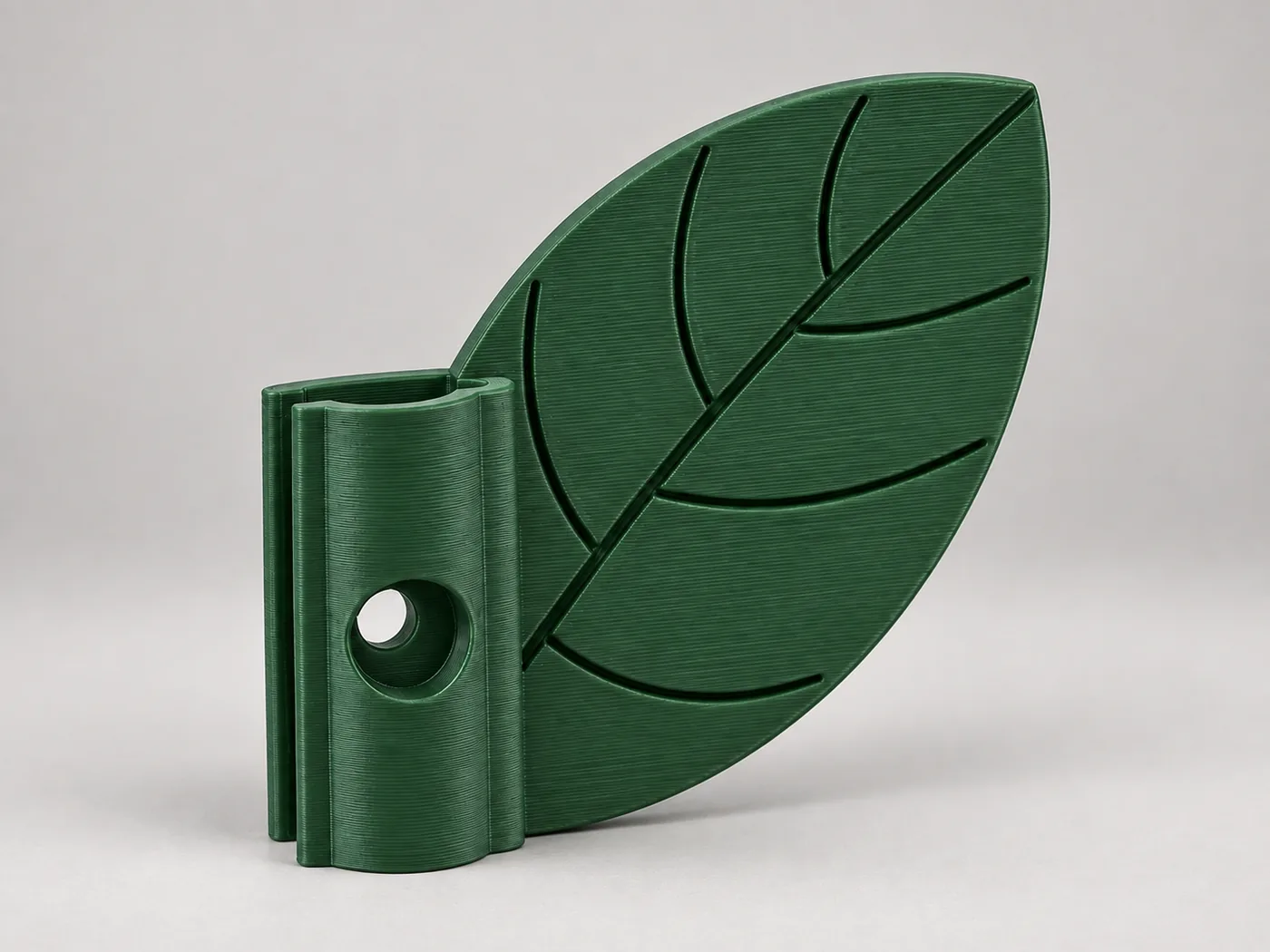
The same 1,811,538-byte leaf PNG went into each product. It shows an open clip and screw hole, not a fully dimensioned drawing.
I tested one image, not ten variants and a cherry-picked winner. Hyper3D received it first on its Free account; SupaVoxel received the SHA-matched PNG on Hobbyist. Within Hyper3D I ran two distinct generations: Gen-2.5 for the newer preview, and Gen-1.5 to obtain a downloadable comparison file. SupaVoxel ran one full generation. Two Hyper3D tasks versus one SupaVoxel task is not a controlled same-operation cost test. The source image was AI-generated with a third-party product cover as visual inspiration; no publication-rights conclusion follows for that underlying reference. These two offline renders are the actual exported textured files, not the gated Gen-2.5 screen; they establish what the different billing paths delivered visually.
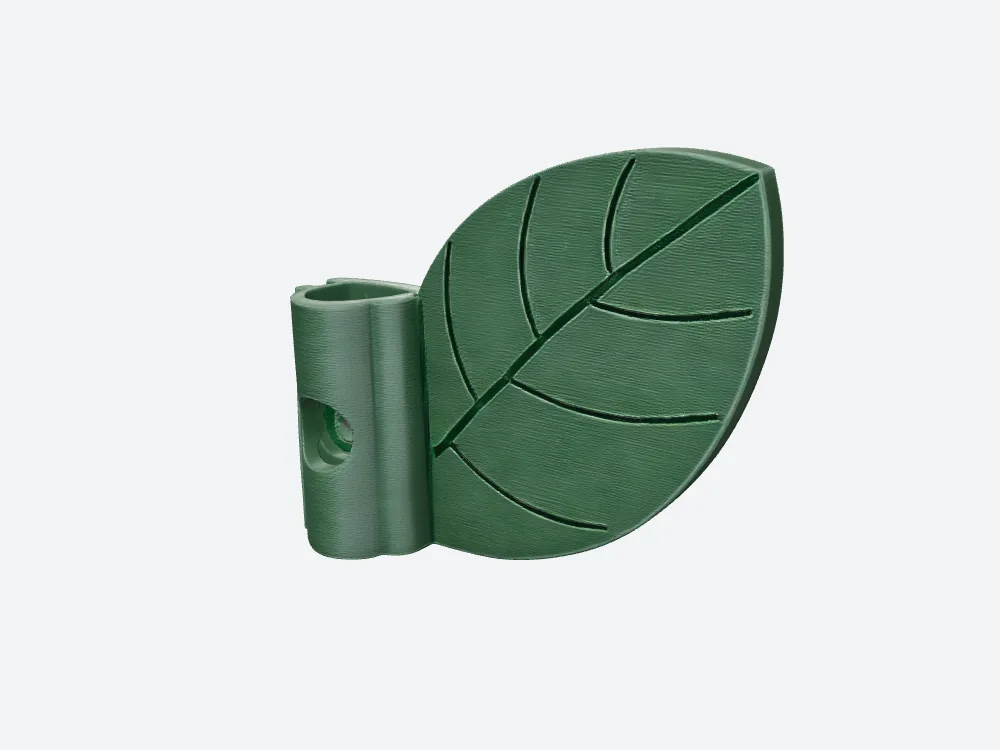
Hyper3D's downloadable Gen-1.5 PBR leaf: the material-confirmed result measured in the ZIP, not the undownloadable million-face preview.

SupaVoxel's textured Original size UI export from the matching input: this is the file attached to the request-specific −3-credit transaction.
Is the displayed 0.5 a receipt for this leaf?
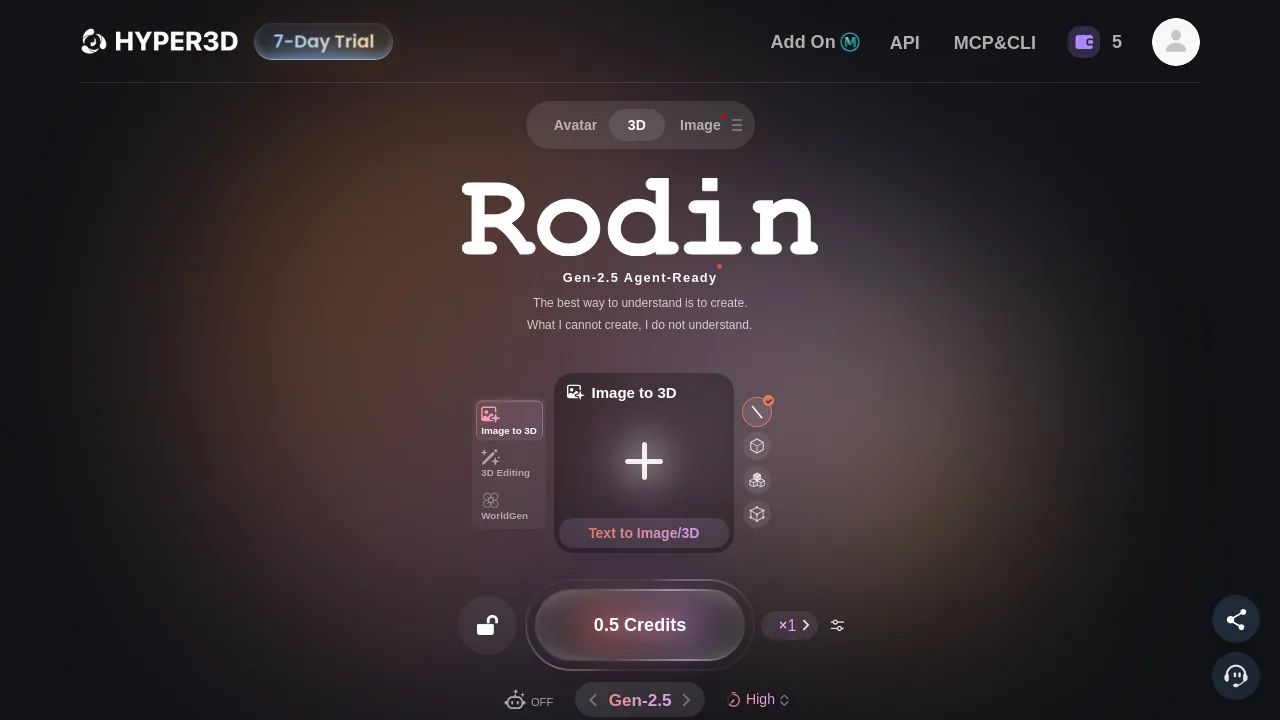
Hyper3D Gen-2.5 / High advertises 0.5 Credits beside the Generate control; the Free account shows five credits at this point.
No. 0.5 Hyper3D credit is a UI tariff for that Gen-2.5 choice, not a debit isolated to this leaf task. The shared account's displayed balance moved 5 → 4 while another case was active on the same login. You cannot bill a full credit to my leaf, nor divide the difference in two and claim each model cost half. A separate pilot established how the button was intended to charge, but it does not replace this case's missing transaction attribution. Five was an observed balance, not proof that free credits renew daily, or at any other interval. When a plan has a shared meter, record a before/after per task before promising a unit cost.
Why was the most impressive result not my asset?
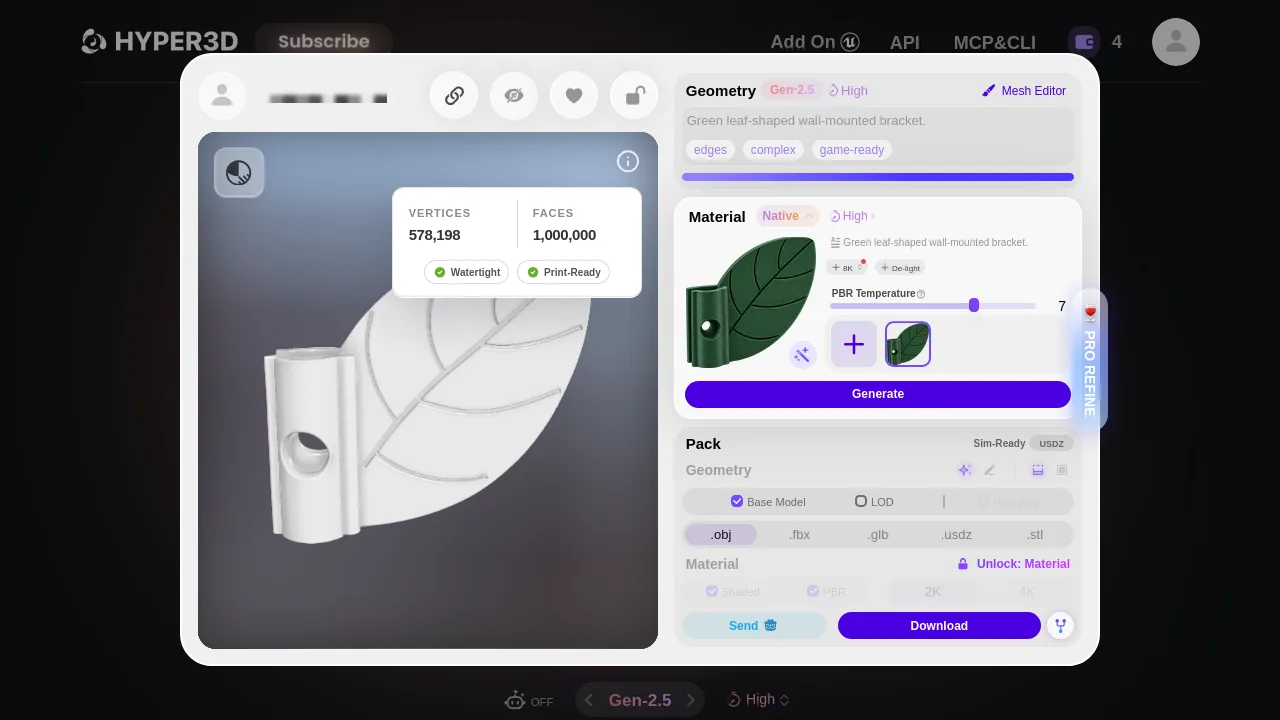
The Gen-2.5 information panel reports 1,000,000 faces / 578,198 vertices and shows a Print-Ready label. These are UI claims for an undownloaded preview.
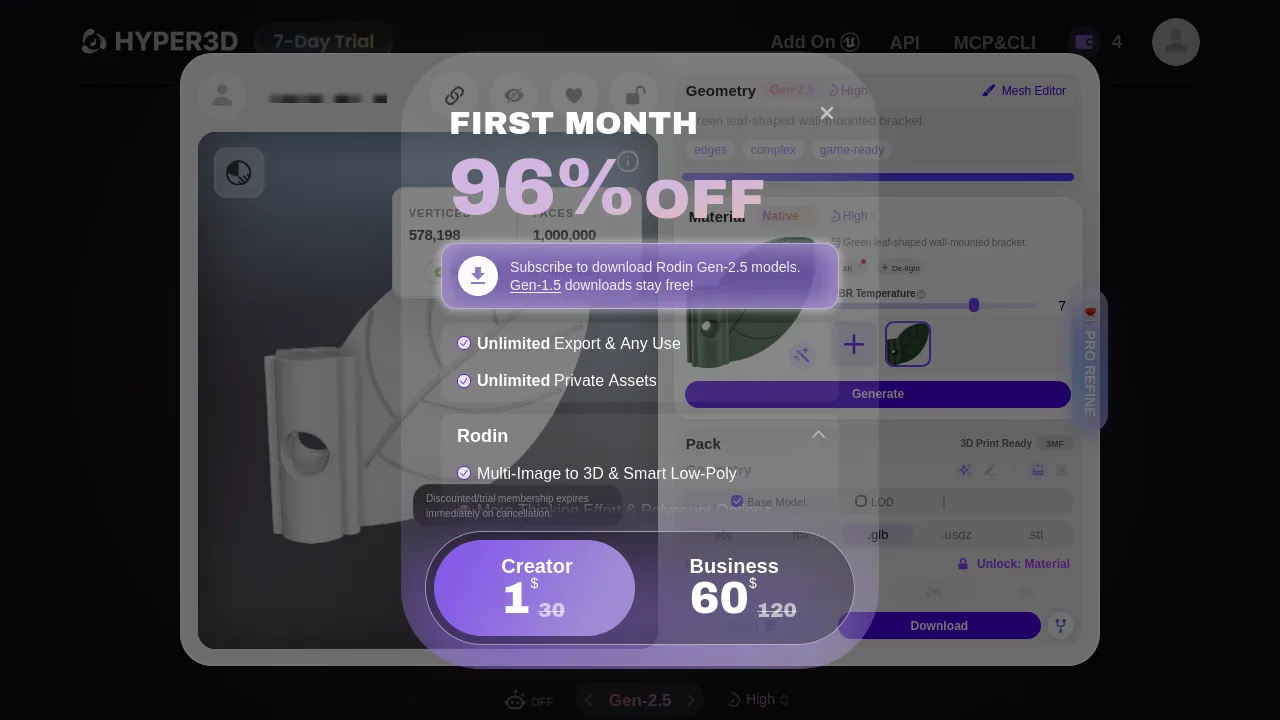
The last-mile test: after selecting GLB, Download asks this Free account to subscribe for Gen-2.5 models.
I could rotate the Hyper3D preview and choose a format. Only on Download did the restriction become unmistakable: “Subscribe to download Rodin Gen-2.5 models. Gen-1.5 downloads stay free!” I bought nothing, so I have no Gen-2.5 GLB for this leaf. A million faces shown by an interface cannot be carried into an offline topology audit or priced as a free downloadable product. The practical consequence was to start again on Gen-1.5. That means the actual file discussed in the companion geometry review is not a low-cost export of the Gen-2.5 screen; it is a separate 120,000-face generation.
What charge can I really tie to the Gen-1.5 file?
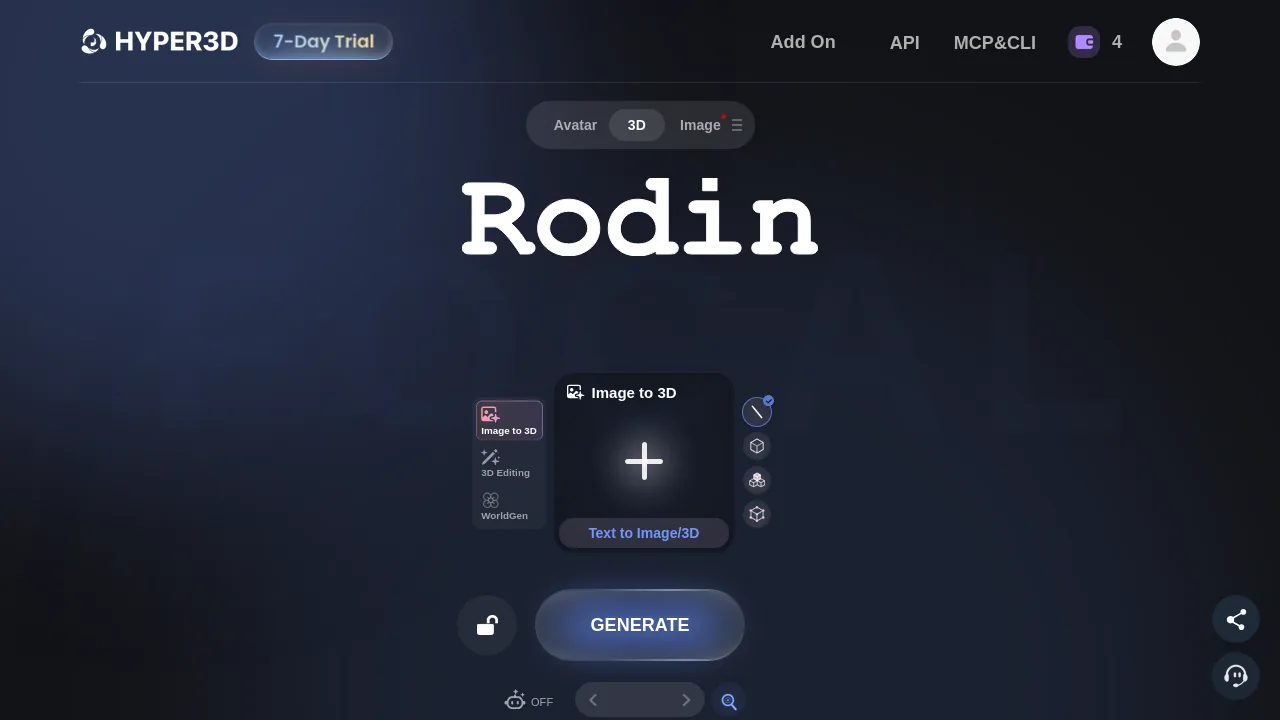
I opened a new Hyper3D Gen-1.5 job with the same image to get a file the Free account could download.
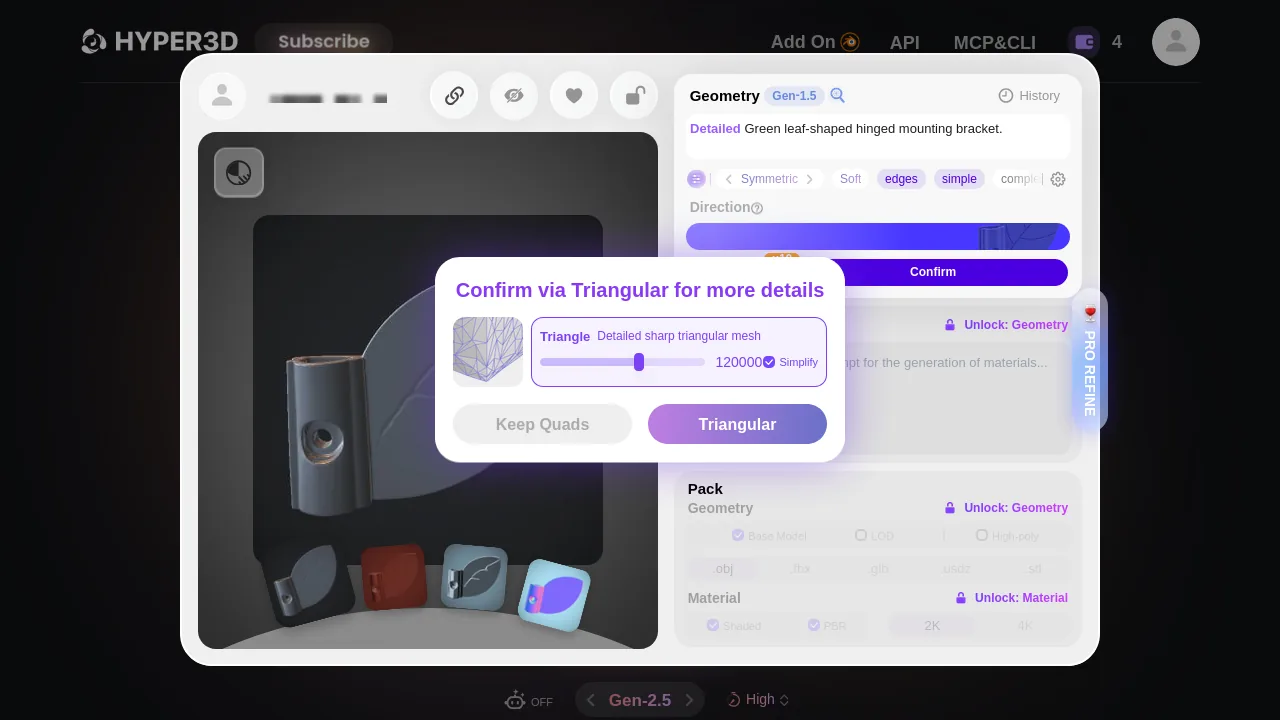
Gen-1.5 geometry Confirm follows the free preview; adjacent case evidence isolates the 4 → 3.5 credit movement at this step.
The Gen-1.5 preview was free in the observed path. Its Geometry Confirm took the shared account from 4 to 3.5, checked with an adjacent authoritative balance read, so 0.5 Hyper3D credit is attributable to this geometry confirmation. Stop the sentence there. The job was not yet the green textured object pictured in the article; its first geometry-only GLB measured 4,184,164 bytes and zero embedded textures. I cannot add the separate Gen-2.5 button tariff to this charge. I cannot call 0.5 the final textured-file price. Precision about which click the half-credit belongs to matters more than a headline ratio against another product.
Why does material need its own blank invoice cell?
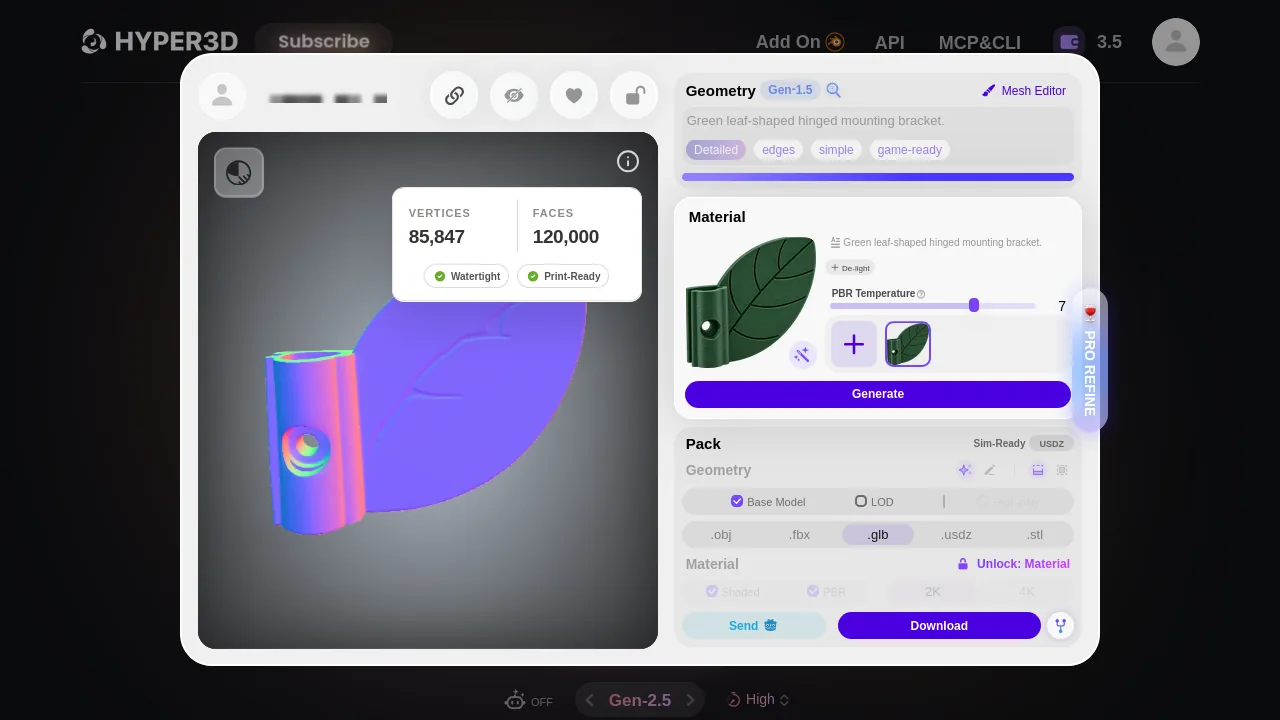
The material pane asks for a new Generate after geometry; color was not part of the first file.
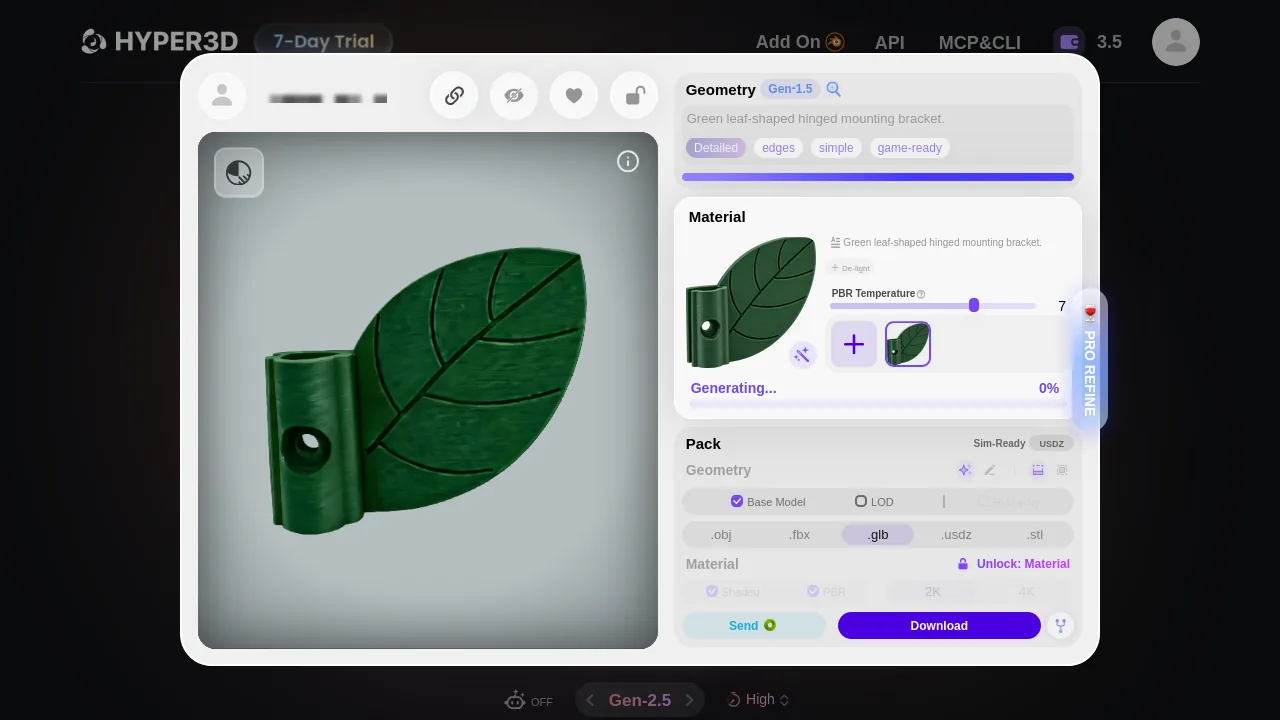
The final successful Material Generate → Confirm produced the textured option; the shared-account balance does not isolate its charge.
There was an early material attempt that showed 0% and returned to Generate without a proven completed result. A later attempt succeeded. I counted the two successful material actions, then selected .glb and Download. During that window the shared header moved 3.5 → 3.0 while another run overlapped. That movement is not evidence that this leaf's material cost exactly 0.5, exactly zero, or any other number. Neither Material Generate nor Material Confirm has a full independent debit record for this case. The complete Hyper3D PBR-file price is therefore unknown. Anyone multiplying a known geometry charge by a hundred to claim the cost of a hundred green finished assets has silently skipped the material stage.
What makes the SupaVoxel receipt different?
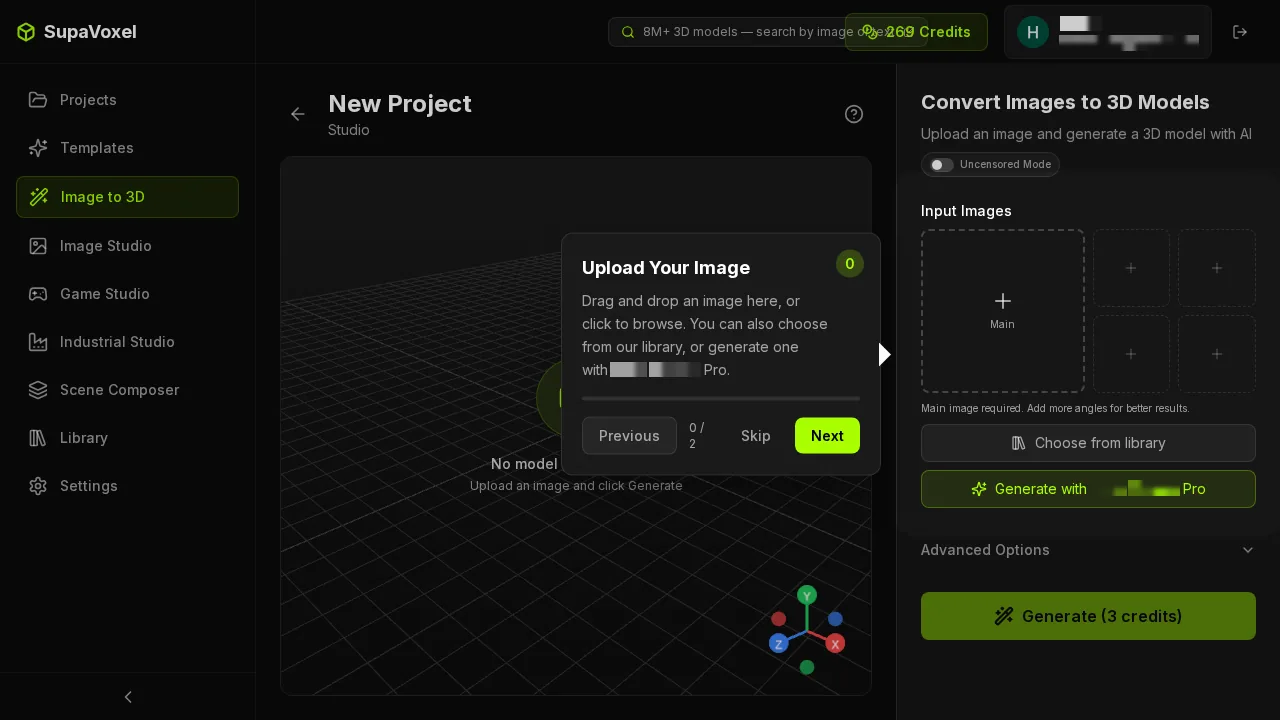
SupaVoxel shows Generate (3 credits) before the request; only one image slot was used.
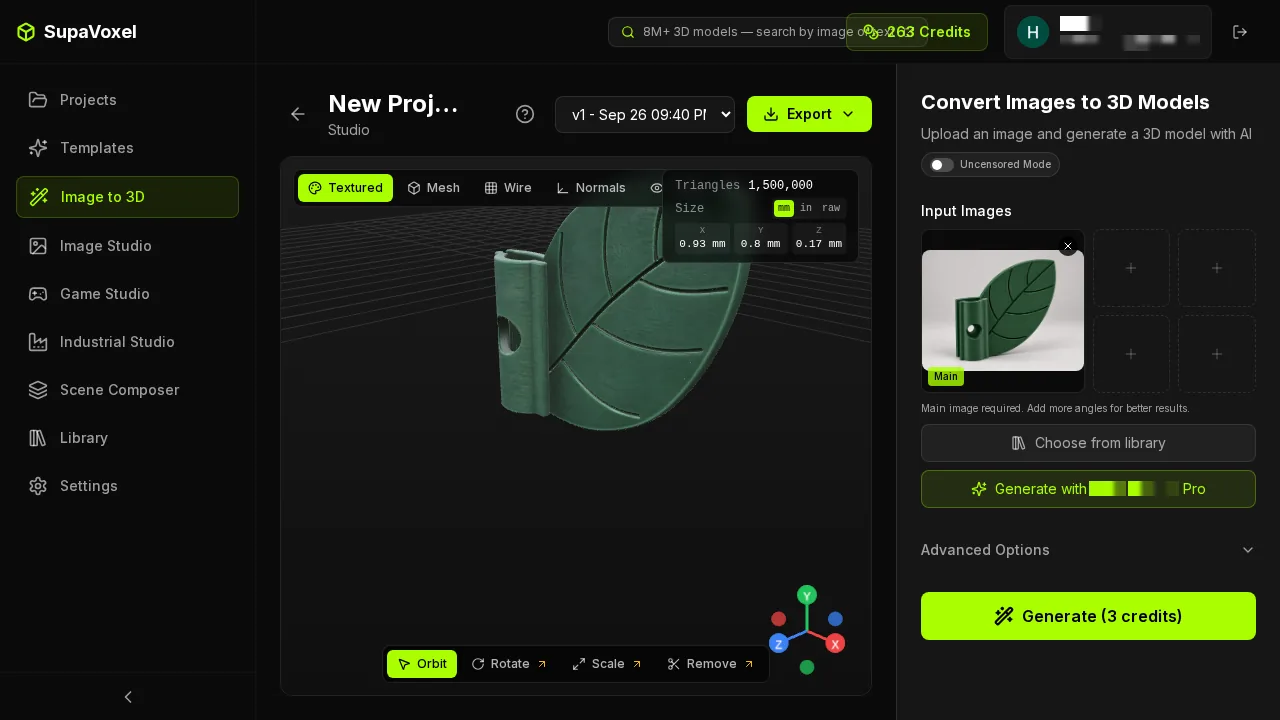
The finished textured leaf corresponds to one completed request with one request-linked −3 credit transaction.
SupaVoxel's record ties this input hash to a specific successful request and a −3 SupaVoxel-credit transaction. Its button also said 3; here the display and transaction agree. The exact instant of debit inside that request was not captured, and the later shared-account balance cannot isolate this job, but the request-linked debit can. This is a stronger budgeting line for one complete textured deliverable than a shared global balance snapshot. I will not claim SupaVoxel costs less in dollars than Hyper3D: the plans use unrelated credit denominations, and Hyper3D's finished-file debit is still missing. My preference for SupaVoxel is about traceability and a completed textured file, not a fictitious 6:1 bargain.
Does a faster geometry clock mean earlier file delivery?
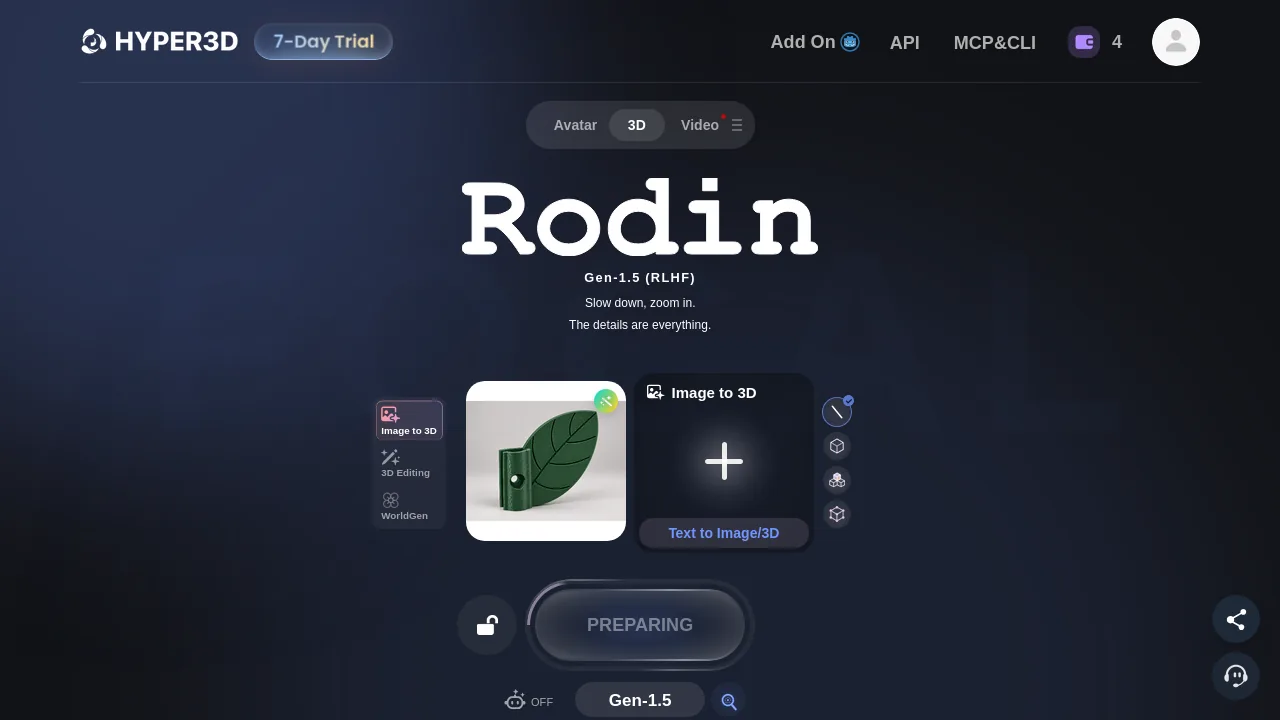
Hyper3D Gen-1.5's measured preview and Geometry Confirm phases total 40.638 seconds; material and export are outside that window.
Hyper3D recorded 25.329 seconds for its Gen-1.5 preview and 15.309 for geometry confirmation. Summed, that is 40.638 seconds of known compute phases. Its Gen-2.5 preview and confirmation took 76.724 and 36.154 seconds on a different run. I did not capture the complete material-stage wall time. SupaVoxel's matched request row spans 266.139 seconds from creation to update, including its internal waiting but excluding earlier upload and later export. Those clocks start and stop at different places. Calling Hyper3D “225 seconds faster” would compare a partial geometry journey with a complete request lifecycle, while hiding the material actions that actually yielded a textured leaf.
What did I download instead of a price-card promise?
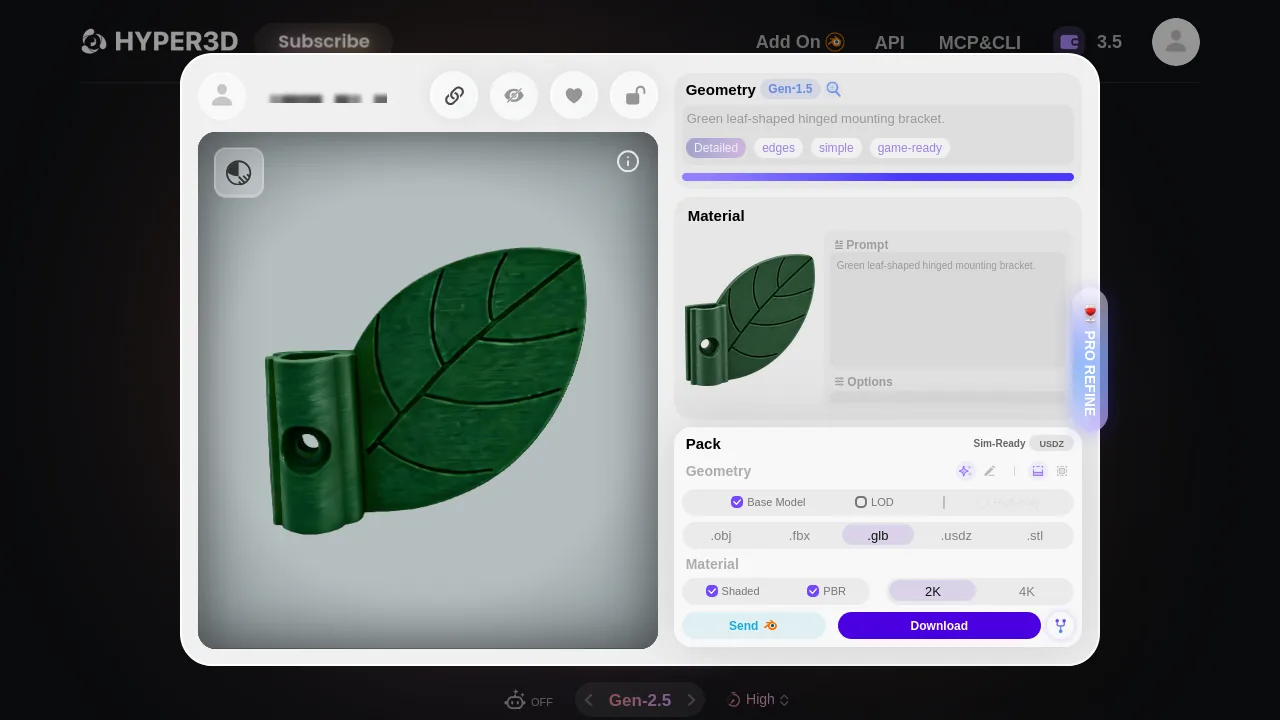
Hyper3D's 2K Shaded + PBR selection delivered a ZIP; the PBR member is not the whole website transfer.
Hyper3D's browser sent a 25,304,144-byte ZIP containing a 16,640,756-byte PBR GLB and an 8,663,136-byte Shaded GLB. I analyzed the extracted PBR member, but I had to receive the ZIP to get it. SupaVoxel's tested Export → GLB → Original size produced a 94,453,592-byte GLB. On a hypothetical clean 12 Mbps line, bytes × 8 ÷ bandwidth gives 16.87 versus 62.97 seconds of pure website-download transfer. Hyper3D wins that row decisively. SupaVoxel displayed a Compressed alternative, but I did not download it; the 94.45 MB number is not a claim about every SupaVoxel export.
Can five trial credits fund a hundred jobs?
No. The Hyper3D Free account showed five credits at one point. Divide that by the isolated 0.5-credit Gen-1.5 geometry Confirm and, only if there are no other debits or renewals, you get at most ten geometry confirmations from those observed credits. You do not get ten fully costed PBR leaves. Scaling the one known geometry charge to 100 confirmations gives 50 Hyper3D credits for geometry alone; material, access to additional credits and actual success rate remain unknown. Scaling SupaVoxel's single complete request to 100 identical successes gives 300 of its own credits, arithmetic rather than a tested batch. Different units, different stages. Neither 50/300 nor ten/100 tells a creator which cash plan to buy.
What export choices remain if my pipeline needs FBX?
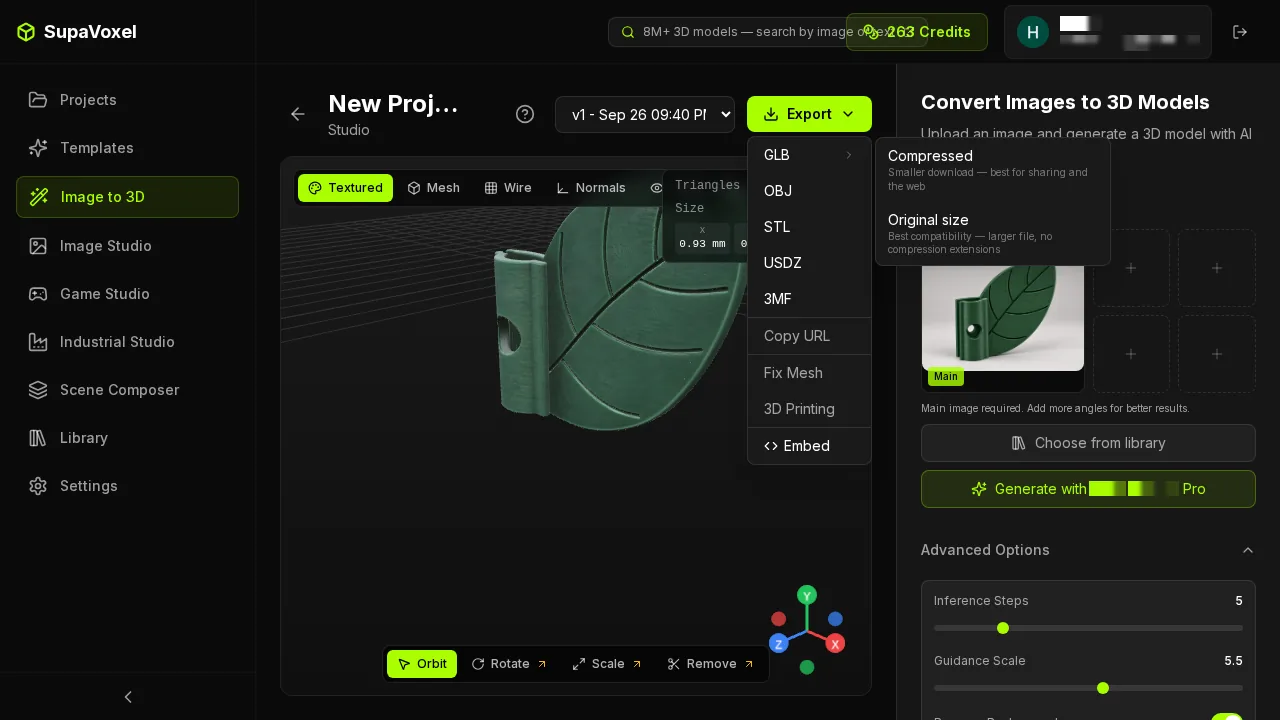
The SupaVoxel GLB submenu shows Compressed and Original size; only the latter became a measured file.
Hyper3D lists FBX, OBJ, GLB, USDZ and STL; SupaVoxel's observed menu lists GLB, OBJ, STL, USDZ and 3MF, not FBX. If your next tool strictly demands FBX, that is a real Hyper3D advantage. For this textured GLB job, however, SupaVoxel needed Export → GLB → Original size, three selections. After Hyper3D geometry confirmation, comparable textured output required Material Generate → Confirm → .glb → Download, four successful operations and ZIP extraction if I wanted only PBR. Counts of selections are not timed labor, and a Free Gen-2.5 paywall cannot be solved by choosing a different format.
Final verdict: what can I honestly put on a budget line?
Hyper3D Gen-2.5 showed 0.5 as a tariff, but no task-isolated debit and no Free-tier download. Its separate Gen-1.5 geometry Confirm demonstrably used 0.5 Hyper3D credit, while the full material-confirmed PBR debit remains unknown. SupaVoxel yielded a finished textured file linked to one −3 transaction in SupaVoxel's own credits. Hyper3D's actual ZIP was much lighter and FBX may make it the correct tool for a different pipeline. For the one finished, attributable textured leaf in this test, I pick SupaVoxel; I do not convert either service's credits into money.
Use SupaVoxel when the deliverable needs an attributable receipt
If you need the file rather than an attractive gated preview, SupaVoxel gave me an attributable full-request debit and a direct GLB export. Budget bandwidth for the tested Original size branch, or separately measure its Compressed option before planning a web catalog. Hyper3D Gen-1.5 deserves consideration when you need FBX or a smaller observed browser transfer, but first run its entire material path with an isolated balance ledger to learn what the completed object actually costs.
How I checked these claims
One SHA-checked leaf image was reused. The Gen-2.5 Hyper3D tariff came from UI and a separate pilot rule, not a debit isolated to this leaf; shared balance differences during parallel tasks are deliberately not assigned. The Gen-1.5 geometry debit was isolated between adjacent balance observations; its two material actions were not. SupaVoxel's charge came from a transaction tied to the successful SHA-matched request. Browser-downloaded packages and GLB member sizes were measured directly. Transfer seconds, 100-job credits and ten-confirmation ceiling are arithmetic under ideal bandwidth/no other debits, not performance, replenishment or cash-plan findings. Neither a complete end-to-end timing comparison nor paid Hyper3D subscription pricing was measured.
Originally published on Medium: Hyper3D Credits Review 2026: 0.5 UI Price, Then a Download Wall.